On the morning of June 13, 2026, Professor Eric Yong‑Joong Lee, Professor of International Law at Dongguk University and President of the YIJUN Institute of International Law, gave an Overseas Scholar Lecture at Jilin University School of Law. The lecture was themed “Advancing Foreign‑Related Rule of Law and Promoting International Exchange.
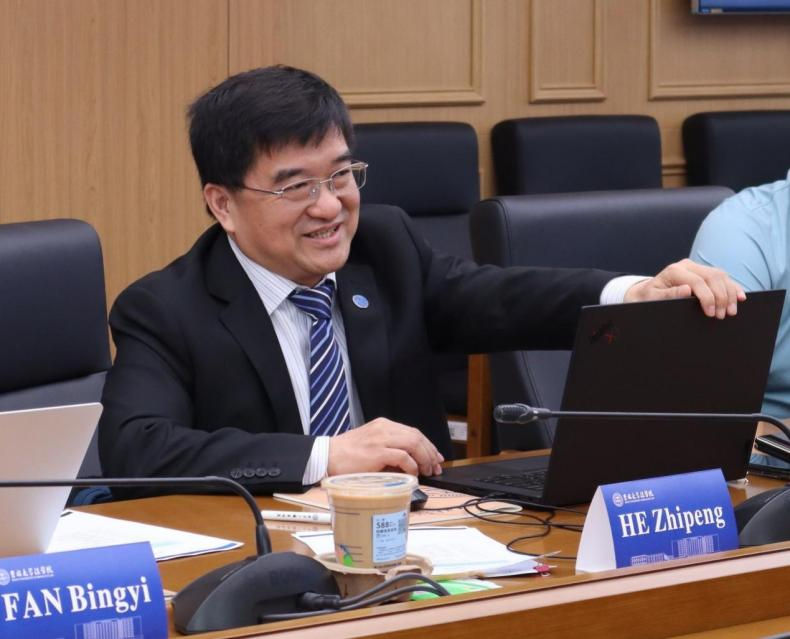
The lecture was chaired by Professor HE Zhipeng, Dean of Jilin University School of Law. On behalf of the School, Professor HE extended a warm welcome and sincere gratitude to Professor Lee for his visit. He briefly elaborated on the significance of advancing foreign‑related rule of law and facilitating international academic exchange.
In his keynote speech, Professor Lee shared his perspectives on two major themes: standards for rigorous critical academic writing, and international‑law issues stemming from U.S. unilateralism.
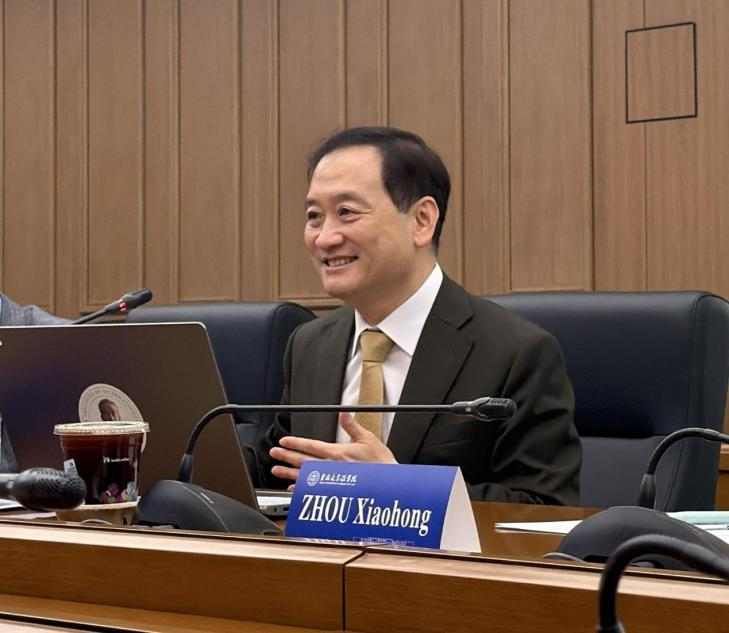
Starting from the question “what constitutes an excellent legal academic paper”, Professor Lee illustrated the fundamental principles of rigorous academic writing and critical thinking across six dimensions: topic selection and title formulation, research methodology, writing style, literature citation, academic ethics, and research output publication. He put forward the three “i”s for topic selection, arguing that quality research topics should integrate inspiration, intuition, and insight.
Professor Lee then conducted systematic jurisprudential analysis on unilateralism in international law. He reviewed just‑war theories and summarized the core elements of a “just war”. Using these criteria, he examined the wars in Afghanistan and Iraq. He pointed out that the U.S. wars launched in the name of counter‑terrorism lasted more than two decades and caused massive loss of human life and property. Instead of effectively curbing terrorism, these conflicts aggravated regional instability. Professor Lee therefore contended that only by rejecting unilateralism, respecting diversity, and pursuing harmonious coexistence under the framework of international law can the world mitigate threats of war and terrorism. Boasting broad vision and rigorous reasoning, Professor Lee’s speech reflected his profound expertise in international law as well as deep concern for world peace and rule‑based international order, and resonated strongly with faculty and students present.
Associate Professor Zhou Xiaohong, Associate Professor Wei Xiaoxu, Ms. Fan Bingyi, and Mr. Valentin engaged in in-depth exchanges with Professor Lee and shared their academic reflections from different perspectives.
Associate Professor Zhou Xiaohong, Associate Professor Wei Xiaoxu, Ms. Fan Bingyi and Mr. Valentin engaged in in‑depth academic dialogue with Professor Lee from diverse disciplinary perspectives.
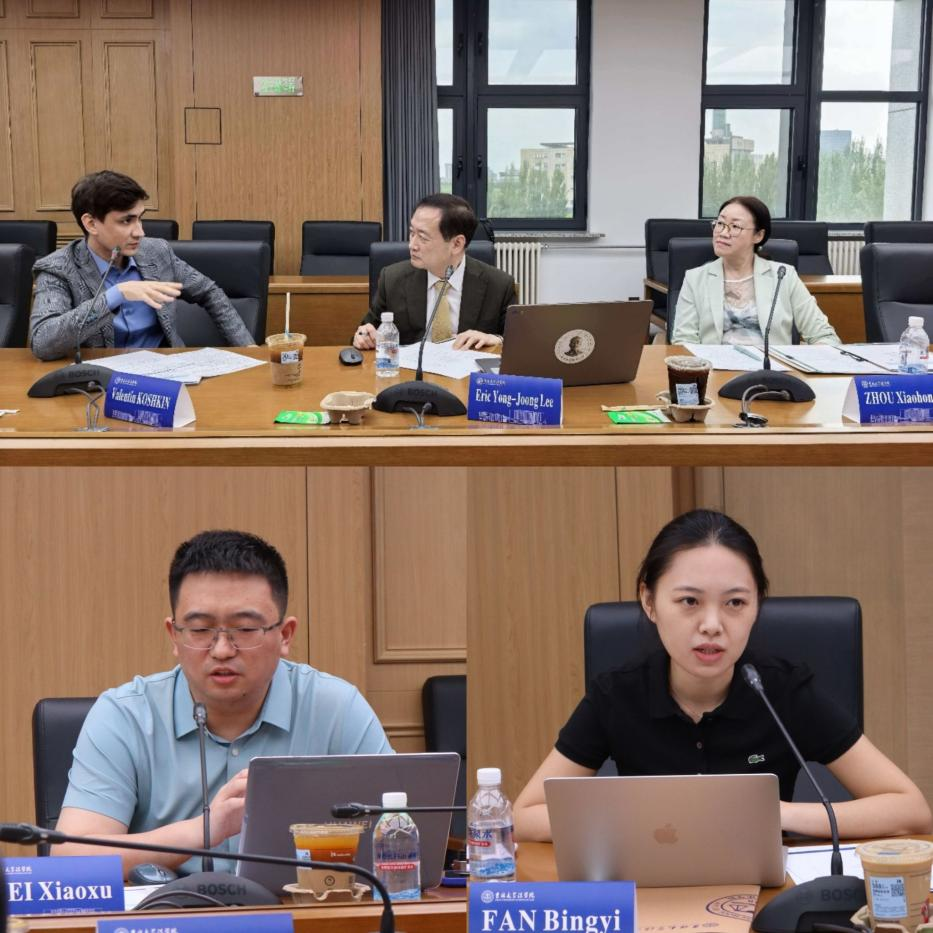
Associate Professor Zhou Xiaohong expressed full agreement with Professor Lee’s viewpoints on critical thinking in academic writing. He further raised questions regarding how the international community can effectively constrain hegemonic behaviour, and whether the United States may evade liability for damages by invoking “American exceptionalism”. Professor Lee endorsed Associate Professor Zhou’s observations. He noted that due to the absence of effective enforcement mechanisms within the international community, hegemonic conduct frequently fails to incur corresponding practical costs in international relations. As for damage compensation, even though international law has established the principle of state responsibility, its implementation is heavily constrained by political realities.
Associate Professor Wei Xiaoxu observed that Western countries demonstrate obvious double standards on human‑rights issues. Many Western states focus heavily on human‑rights situations in countries such as Iran and Venezuela, yet pay insufficient attention to human‑rights harms resulting from military operations conducted by states including the United States and Israel. Against this backdrop, he argued that non‑Western countries should strive for a fairer and more rational international order through both dialogue and constructive struggle. Professor Lee responded that while international law is inevitably subject to power politics, it remains an irreplaceable instrument for regulating state conduct and sustaining international order.
Ms. Fan Bingyi noted that profound global shifts together with digital and intelligent technological advances are transforming traditional international‑law research. Scholars are confronted with a series of research questions: whether these developments bring merely temporary impacts or a full paradigm shift for international law; how to embed macro global transformations into concrete research projects; and how to identify high‑quality research topics. Professor Lee advised scholars to closely follow contemporary global trends and reflect them in their research. Emerging domains including cyberspace and artificial intelligence represent hot research frontiers. Young scholars ought to strike a balance between personal academic interests and cutting‑edge scholarly trends so as to align with thematic preferences of academic journals.
Mr. Valentin commented on the Republic of Korea’s status as an observer state of the Arctic Council. South Korea has long attached great importance to Arctic shipping‑route development and established relevant legal and policy frameworks at an early stage. He raised a question concerning the research significance of Arctic law for South Korea. Professor Lee explained that polar‑law research carries both theoretical and practical value. Arctic shipping lanes can drastically shorten voyages between East Asia and Europe and connect Asia and North America, holding enormous development potential. Moreover, Antarctica constitutes part of the global commons; its governance hinges on deepened international cooperation grounded in existing treaties. Research integrating deep‑sea issues and commercial activities also attracts substantial attention from academic journals.
During the open Q‑and‑A session, participants consulted Professor Lee on topics including interpretations of American exceptionalism, pathways toward regional security and development, and best practices for academic writing. Professor Lee emphasized that understanding complex international phenomena requires historical contextualisation and consideration of multiple practical factors. For paper writing, he encouraged students to read extensively, maintain critical thinking, and keep track of global issues.
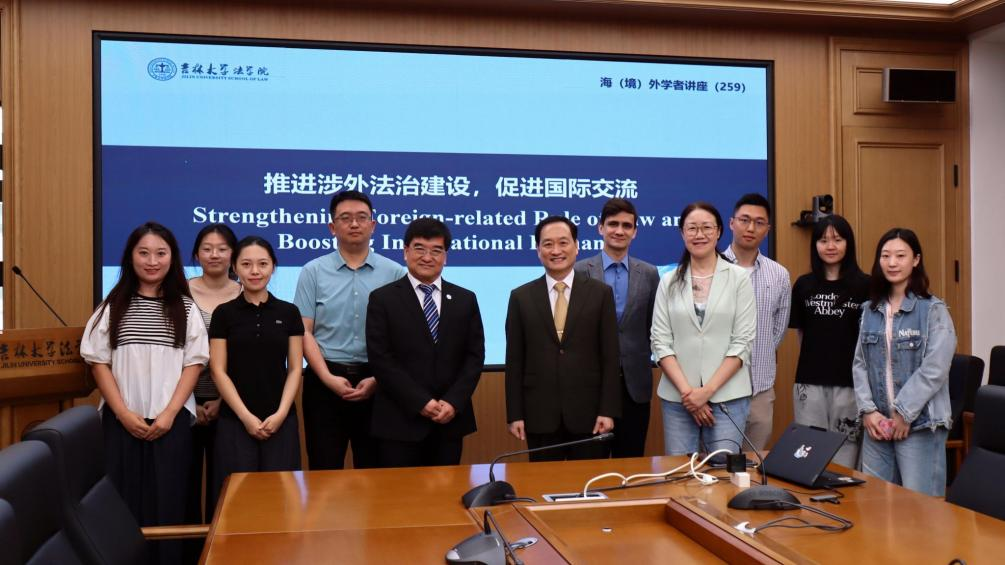
Centered on foreign‑related rule‑of‑law development, this lecture facilitated multi‑perspective academic exchange and intellectual dialogue. It is of great significance for broadening participants’ international horizons, strengthening research capacity in foreign‑related rule of law, and advancing international academic collaboration, while offering valuable inspiration for teaching and research within relevant disciplines.
Written by: Li You, Sun Tian, Liu Jiuying
Photography by: Liu Xiaoyu
Translated by: Duan Ran, Han Kunze, Liu Baohan
Edited by: Shi Yao


