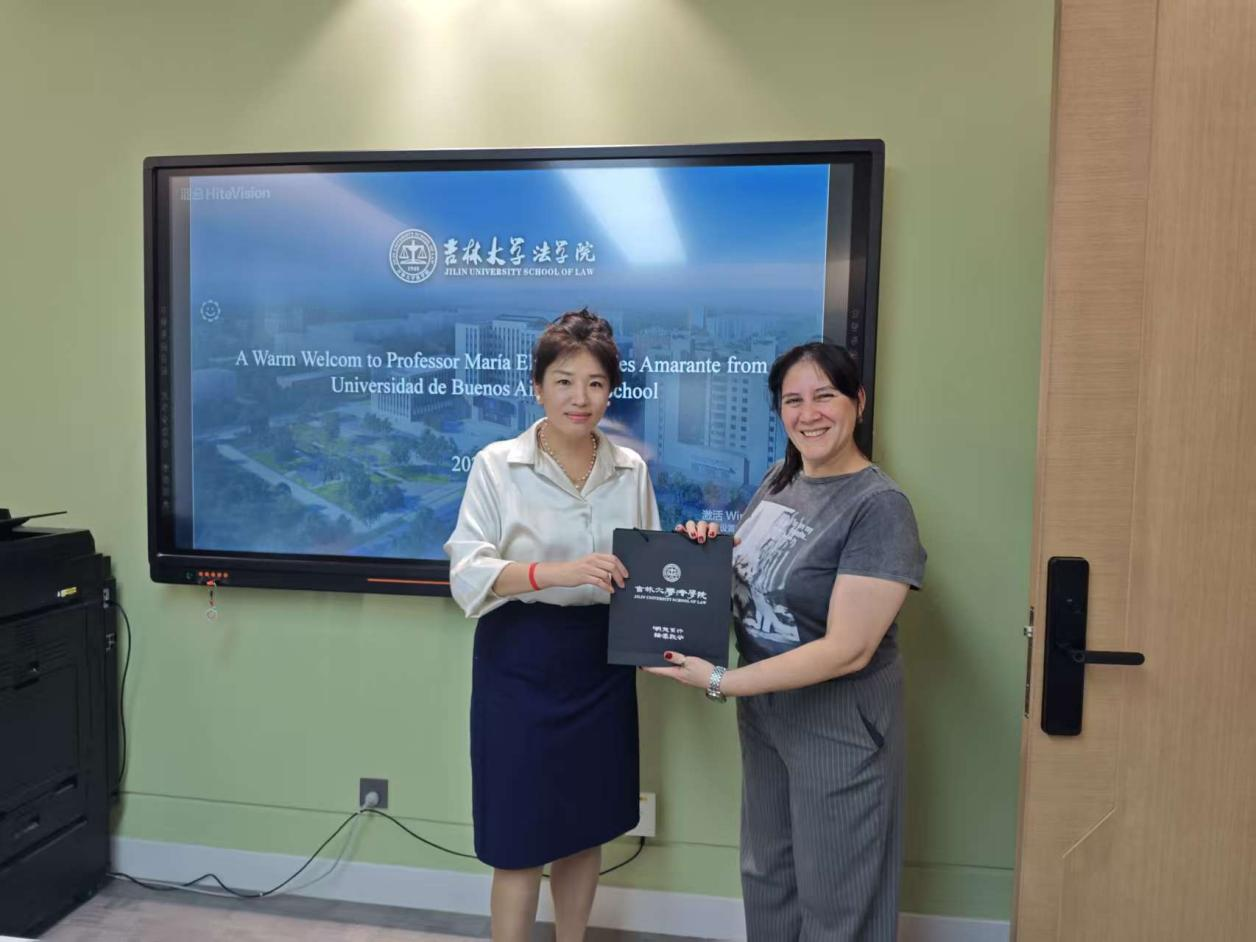
From May 20 to June 9, Professor María Elvira Morales Amarante from the University of Buenos Aires, Argentina, visited Jilin University School of Law and participated in a full schedule of academic lectures and exchange events. At the welcome meeting hosted by the School, Professor WEN Shuangge, Vice‑Dean for International Affairs, extended a warm welcome to Professor Morales on behalf of Jilin University School of Law.
Throughout her visit, Professor Morales delivered lecture series covering intercultural communication, regional integration, e‑commerce and digital‑trade regulation, and artificial‑intelligence governance. She also conducted extensive academic exchanges with faculty members and students around these themes.
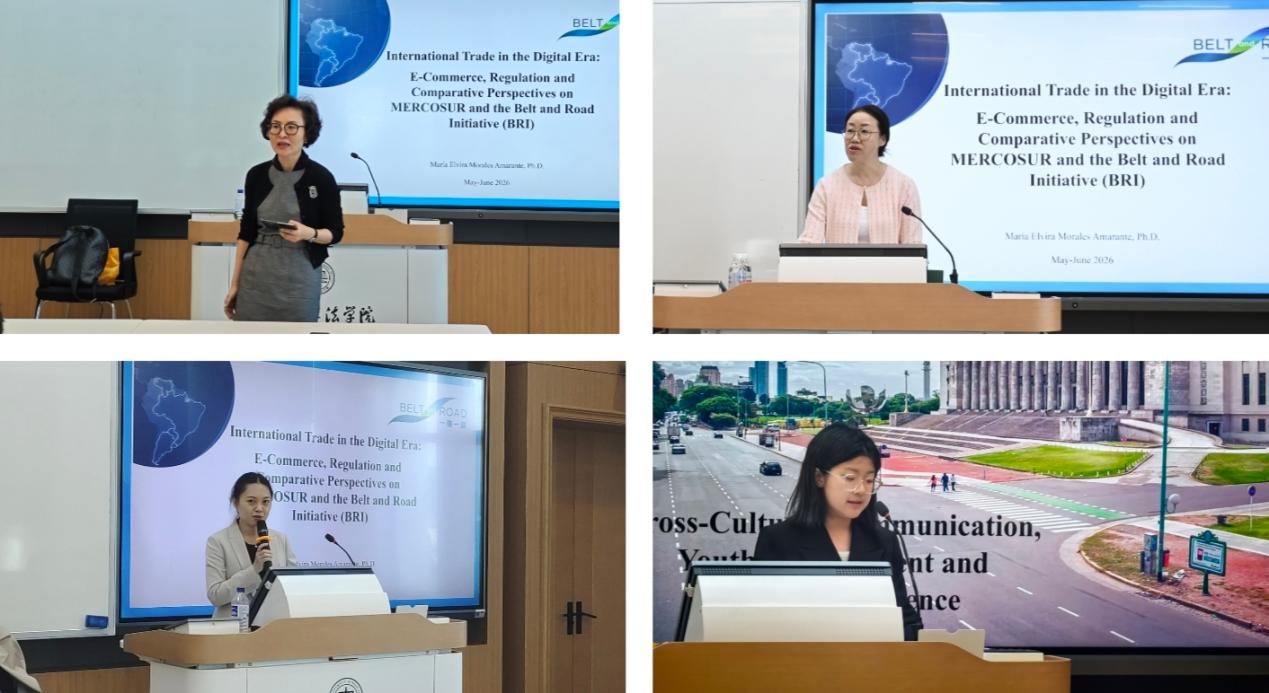
On May 25, Professor Morales gave a lecture entitled Intercultural Communication, Youth Development, and Global Competence in Room B405 of the Law Building. The session was chaired by Ms. PENG Xintian, Undergraduate Counsellor of Jilin University School of Law. Starting from cultural differences in cross‑cultural communication, Professor Morales drew on real‑world international‑business cases to analyse communication traits within high‑context and low‑context cultural systems. She stressed that many barriers to international cooperation stem not from insufficient professional expertise, but from cross‑cultural misunderstanding. Focusing on core competencies for legal professionals in the AI era, she discussed whether lawyers might be replaced by artificial intelligence. Using the classic “trolley problem” as an illustration, she guided attendees to reflect on the interconnections among law, morality and liability.
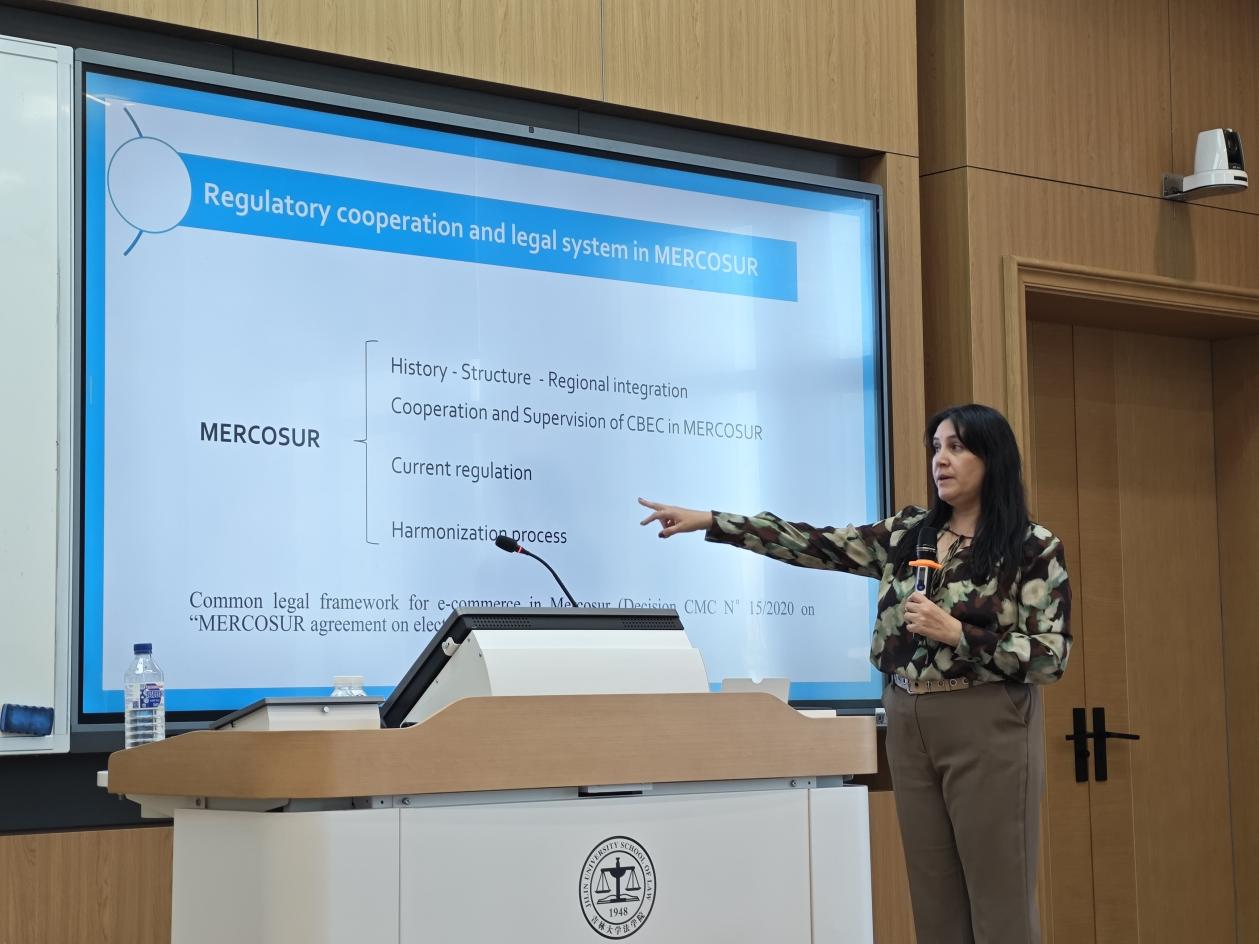
On May 28, Professor Morales presented her lecture Regional Integration: The Cases of MERCOSUR and the Belt and Road Initiative, chaired by Ms. Fan Bingyi. This lecture explored legal dimensions of regional integration and institutional practices of the Southern Common Market (MERCOSUR). Beginning with basic concepts of regional integration, Professor Morales distinguished regional integration from ordinary forms of international cooperation. Taking MERCOSUR as a primary case study, she introduced its historical background, institutional goals, organisational structures and legal mechanisms. She further analysed rules governing member states’ joint negotiation of preferential trade agreements alongside implementation‑related challenges, highlighting practical dilemmas including national‑interest coordination, domestic incorporation of international norms, and enforcement of collective policies.
On May 29, Professor Morales delivered the lecture E‑Commerce and Digital Trade Regulation, chaired by Professor YU Ying. She addressed cross‑border e‑commerce legal barriers, international regulatory coordination and regional‑cooperation mechanisms. Professor Morales noted that cross‑border e‑commerce facilitates trade while bringing new challenges: uncertainty of applicable law, conflicts over tax jurisdiction, and divergent consumer‑protection standards. When discussing global approaches to digital‑trade governance, she reviewed prevailing global governance practices by examining the EU‑MERCOSUR Free Trade Agreement, e‑commerce clauses embedded in regional‑trade agreements and online dispute‑resolution frameworks. She also shared recent legislative updates on e‑commerce within MERCOSUR.
On June 5, Professor Morales offered her lecture Artificial Intelligence and Emerging Regulatory Challenges, chaired by Associate Professor Zhou Xiaohong. The session covered evolving international‑trade rules under artificial‑intelligence development, regional digital governance, and China‑Latin‑American digital‑economy cooperation. Professor Morales pointed out that although artificial intelligence improves trade efficiency and promotes industrial collaboration, it generates new legal risks involving cross‑border data flows, data security and algorithmic oversight. Comparing digital‑trade regulatory practices of MERCOSUR, the European Union and China, she analysed divergences in governance philosophies and regulatory approaches across jurisdictions, with special reference to the EU AI Act and relevant Chinese regulatory frameworks.
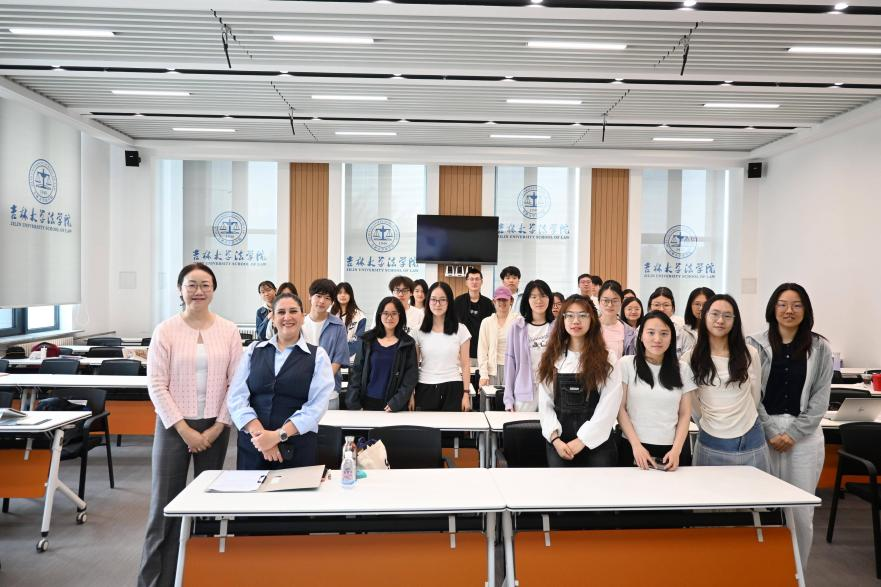
This visiting programme featured rich content and diverse themes. It provided valuable insights into Latin‑American regional‑cooperation developments and digital‑trade governance, helping faculty and students deepen their understanding of transnational legal practice and expand their international academic vision.
Written by: Duan Ran, Han Kunze, Liu Baohan
Photography by: Duan Ran, Han Kunze, Liu Baohan
Translated by: Duan Ran, Han Kunze, Liu Baohan
Edited by: Shi Yao


